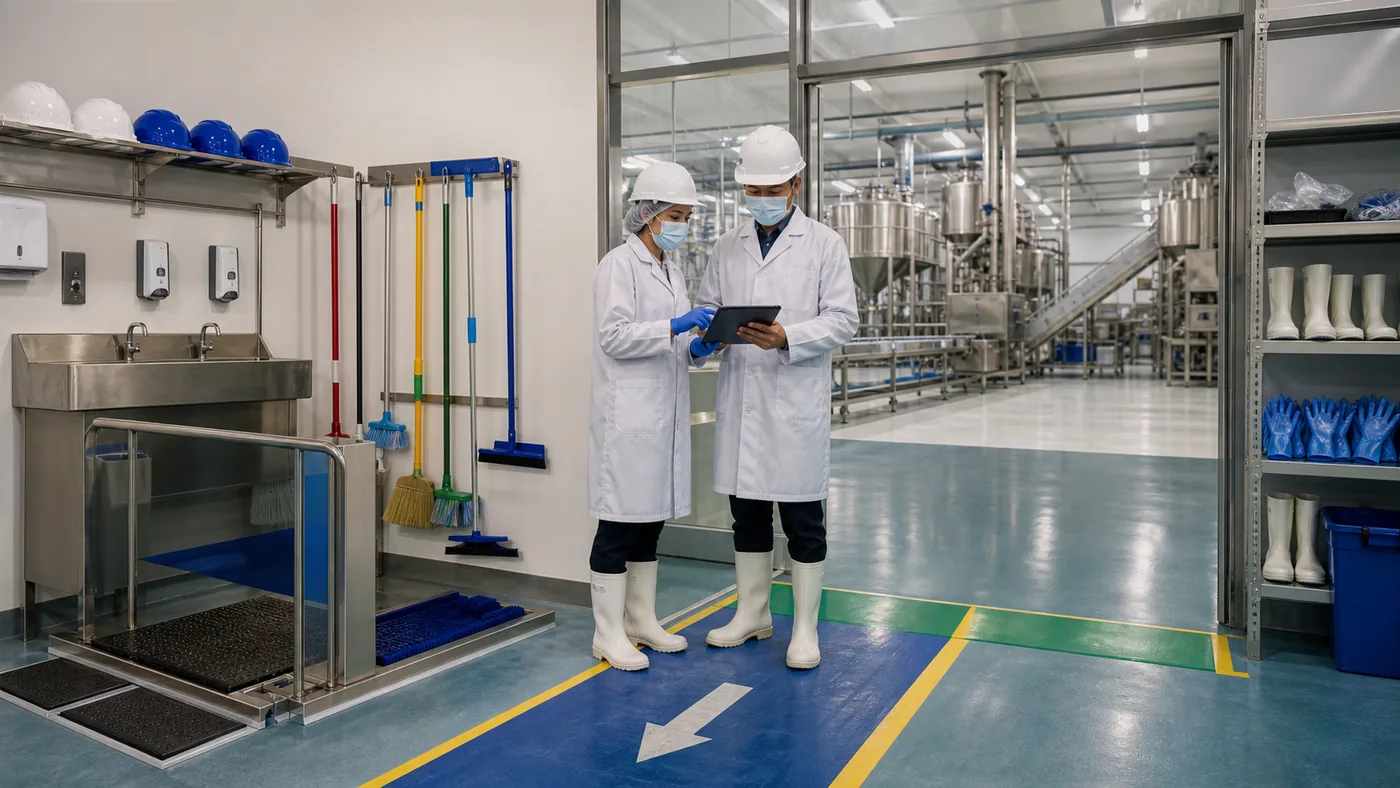
Hygiene and sanitation planning should be part of a pet food factory project before production starts. It is not only a daily cleaning task after the equipment is installed. The building layout, personnel route, raw material route, cleaning tools, dust collection, pest control, drainage, room separation, storage practice, and production records all affect whether the factory can operate in a controlled and repeatable way.
Dry pet food factories need a different sanitation logic from wet food or beverage plants. A dry kibble line, treat line, or supplement workshop may not benefit from frequent water washdown in all areas. Excess moisture can create product clumping, microbial risk, corrosion, dust paste, slippery floors, and downtime if the plant is not designed for wet cleaning. For many dry production zones, the preferred routine is controlled dry cleaning, targeted disassembly, industrial vacuuming, inspection, and documented release before the next batch.
This guide explains how to plan hygiene and sanitation for a dry pet food factory. It connects with the pet food factory system, because sanitation cannot be added as a separate checklist after the building, equipment layout, and staffing plan are already fixed.
Start sanitation planning from factory zoning
Factory zoning is the first step. A pet food plant should separate outside traffic, raw material receiving, raw material storage, grinding and batching, mixing and extrusion, drying and cooling, coating, packing, finished goods storage, waste handling, maintenance, staff changing, and visitor routes. The purpose is not to make the layout complicated. The purpose is to prevent unnecessary cross-traffic and make daily control easier.
For example, dusty raw material areas should not push uncontrolled dust toward packing or finished goods storage. Waste movement should not share a route with cleaned packaging materials. Maintenance tools should have a controlled storage point, not be left around production equipment. Personnel movement should support PPE control, hand hygiene, and shoe or sole control where needed.
The hygiene plan should be reviewed together with the factory layout and QC workflow. A layout that looks efficient on paper can still create sanitation problems if tools, waste, rework, packaging material, and operators move through the same narrow route.
Dry cleaning should be designed into the workflow
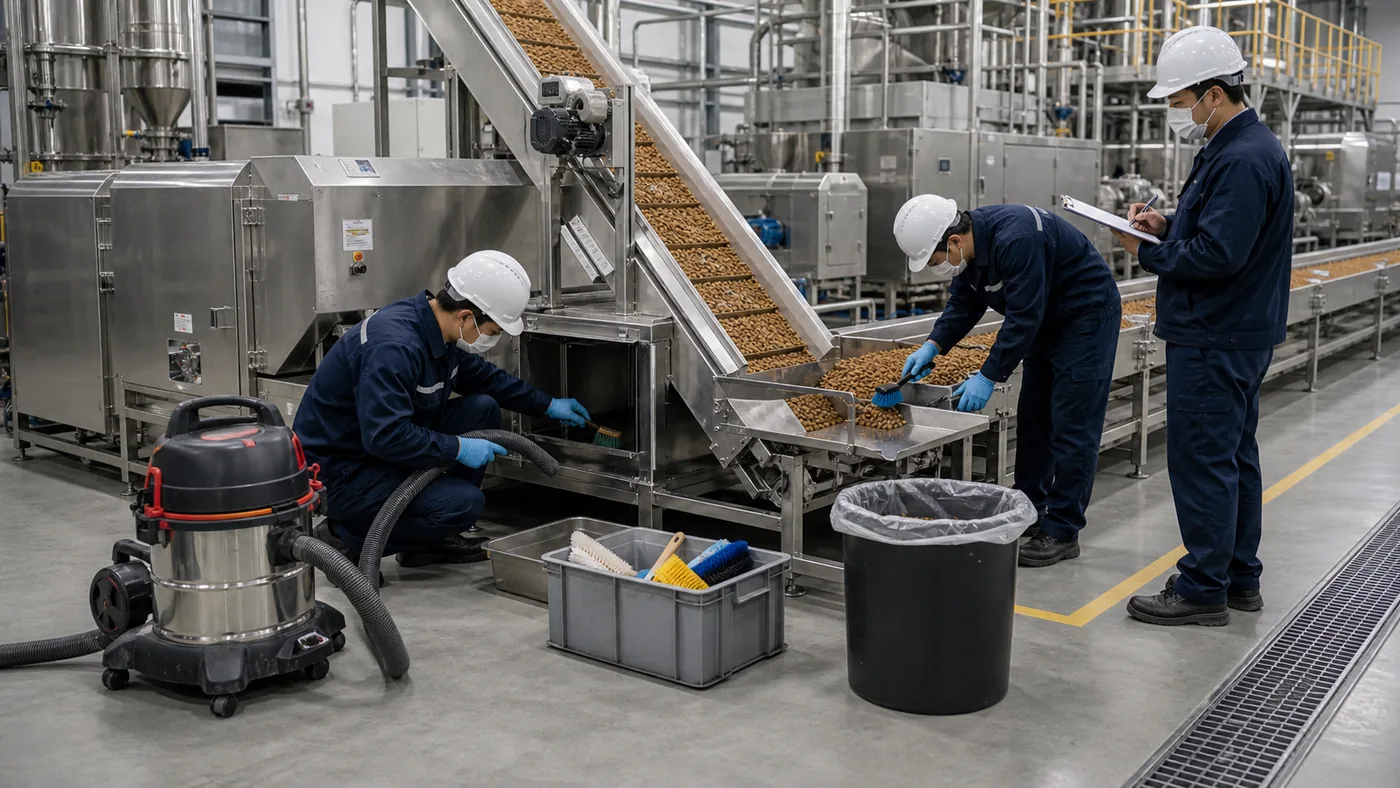
Dry pet food production creates crumbs, dust, fines, powder residues, flavor residues, and material buildup at transfer points. Cleaning these areas with uncontrolled water is usually not the first choice. Dry cleaning may include brushing, scraping where appropriate, vacuuming with suitable industrial equipment, removing detachable covers, checking dead corners, cleaning magnets or screens, and inspecting transfer points before restart.
Dry cleaning works only when the factory is designed for it. Equipment should allow access to critical points. Floors should be easy to sweep and vacuum. Dust collection should support routine housekeeping. Cleaning tools should be available near the correct zone and stored cleanly after use. Operators should know which tool belongs to which area and which residue must be removed before a product changeover.
The cleaning method should be written by area and equipment type. A raw material receiving area, grinder, mixer, extruder feed point, dryer discharge, cooler, coating drum, packing scale, and conveyor transfer point do not all need the same method or frequency. A practical sanitation plan is specific enough that operators can follow it consistently.
When wet cleaning is needed, control the risk
Wet cleaning may still be needed in certain areas, especially staff facilities, some non-production floors, specific washable equipment parts, or areas designed with drainage and drying capacity. The key is control. If water is used in a dry production zone, the factory must define where it is allowed, how equipment is protected, how residues are removed, how the area is dried, how dryness is verified, and who releases the area for production.
Uncontrolled wet cleaning can create more risk than it removes. Water can carry residues into cracks, electrical areas, bearings, conveyors, and difficult-to-dry surfaces. In powder-heavy zones, water can turn dust into paste and make later cleaning harder. For this reason, dry pet food factories should not copy a washdown approach without checking product route, equipment design, drainage, drying time, and microbial expectations.
Product changeover and flavor carryover
Product changeover is one of the most important sanitation topics in a multi-SKU pet food factory. The factory may change from one protein source to another, one kibble size to another, one palatant to another, or one customer formula to another. Residues left in hoppers, conveyors, dryers, coolers, coating drums, buckets, packing scales, or transfer points can cause carryover, appearance defects, wrong odor, labeling concerns, or quality complaints.
The changeover procedure should define the cleaning level by product risk. Some changes may need routine dry cleaning and inspection. Some may need deeper disassembly or flushing with approved material. Some may require separate tools or dedicated equipment if allergen or claim-sensitive ingredients are involved. The factory should also define who approves the line before the next product starts.
Changeover should be connected with production planning. If the schedule jumps between very different formulas many times a day, cleaning time and material loss can become significant. A good plan groups products logically and reduces unnecessary cleaning burden while still protecting product quality.
Tool control and cleaning equipment management
Cleaning tools are part of the sanitation system. Brushes, scrapers, vacuum attachments, bins, cloths, and inspection tools should be selected for the factory environment and stored in a controlled place. Color coding can help separate raw material, production, packing, and non-production tools. Damaged tools should be replaced before they become a foreign material risk.
Industrial vacuum equipment should be selected for the type of dust and operating area. Compressed air should not be used casually to blow dust from one place to another, because it can spread residues, create airborne dust, and move contamination into harder-to-clean locations. If compressed air is used for a specific operation, the method should be defined and controlled.
Pest control and building protection
Pet food factories handle grains, proteins, fats, flavors, packaging materials, and finished goods. These materials can attract pests if storage, waste handling, building sealing, and housekeeping are weak. Pest control starts with building design and discipline: sealed doors, controlled dock areas, clean external perimeter, good waste handling, managed drains, clean pallets, proper raw material storage, and routine inspection.
A pest control provider can support monitoring, but the factory team still owns the daily conditions that attract or prevent pests. Spilled material should be cleaned promptly. Damaged bags should be isolated. Waste should not accumulate near production or warehouse areas. Doors should not remain open without control. These points sound basic, but they are often where real factory problems start.
Sanitation records and release checks
A sanitation plan is incomplete without records. Records do not need to be complicated, but they should show what was cleaned, when it was cleaned, who cleaned it, who inspected it, what issue was found, what corrective action was taken, and whether the area was released for production. For higher-risk changeovers, the record may also include line clearance, material removal, tool check, inspection photos, or quality approval.
Digital records can be useful, especially as the plant adds automation and traceability. The earlier guide on factory automation and traceability explains how production records, recipe control, and batch data can connect with factory management. Sanitation records can follow the same principle: the record should help the team control the process, not just fill a file.
Environmental checks and verification
Some factories may use environmental monitoring, surface checks, swabs, visual inspection, ATP testing, foreign material checks, or other verification methods depending on product type, customer requirement, local regulation, and internal quality system. The exact method should be chosen with qualified quality and regulatory support. The important point for factory planning is that verification needs space, tools, responsibility, and time in the production schedule.
For dry pet food, visual residue checks, moisture control, dust control, pest monitoring, foreign material prevention, and batch release discipline can be as important as a single laboratory result. Verification should match the real hazards of the process and the expectations of the target market.
Training operators for realistic sanitation
Sanitation fails when procedures are written but operators do not have the time, tools, or training to do the work. Training should cover why dry cleaning is used, when wet cleaning is allowed, how tools are separated, where residues collect, how to inspect transfer points, how to report abnormal findings, how to handle damaged packaging or spilled material, and how to complete changeover records.
Training should also be part of commissioning. When a new line is started, operators should practice cleaning and changeover while the equipment supplier and factory management can still adjust access points, covers, tool locations, and inspection routines. The production line commissioning guide explains why trial production should include operator handover, not only machine running.
What to prepare before the factory starts production
Before launch, the project team should prepare zoning rules, cleaning procedures by area, product changeover rules, tool lists, sanitation records, pest control plan, waste handling route, staff hygiene rules, visitor control, corrective action process, and release responsibility. The team should also review whether the equipment layout gives enough access for cleaning and inspection.
PetFactorySystem.com can help buyers review sanitation planning together with factory layout, equipment route, utility plan, commissioning, and launch preparation. If you are planning a new dry pet food factory or checking an existing building before equipment installation, you can send the project information and request a hygiene and sanitation planning review.
Official references
Factory sanitation and preventive-control planning should be checked against applicable local requirements. Useful primary references include the U.S. FDA animal food business guidance and the FDA CGMP guidance for food for animals.
Review the related factory system
Compare the production route, equipment package, layout assumptions, capacity target, and operating requirements before confirming a factory plan.