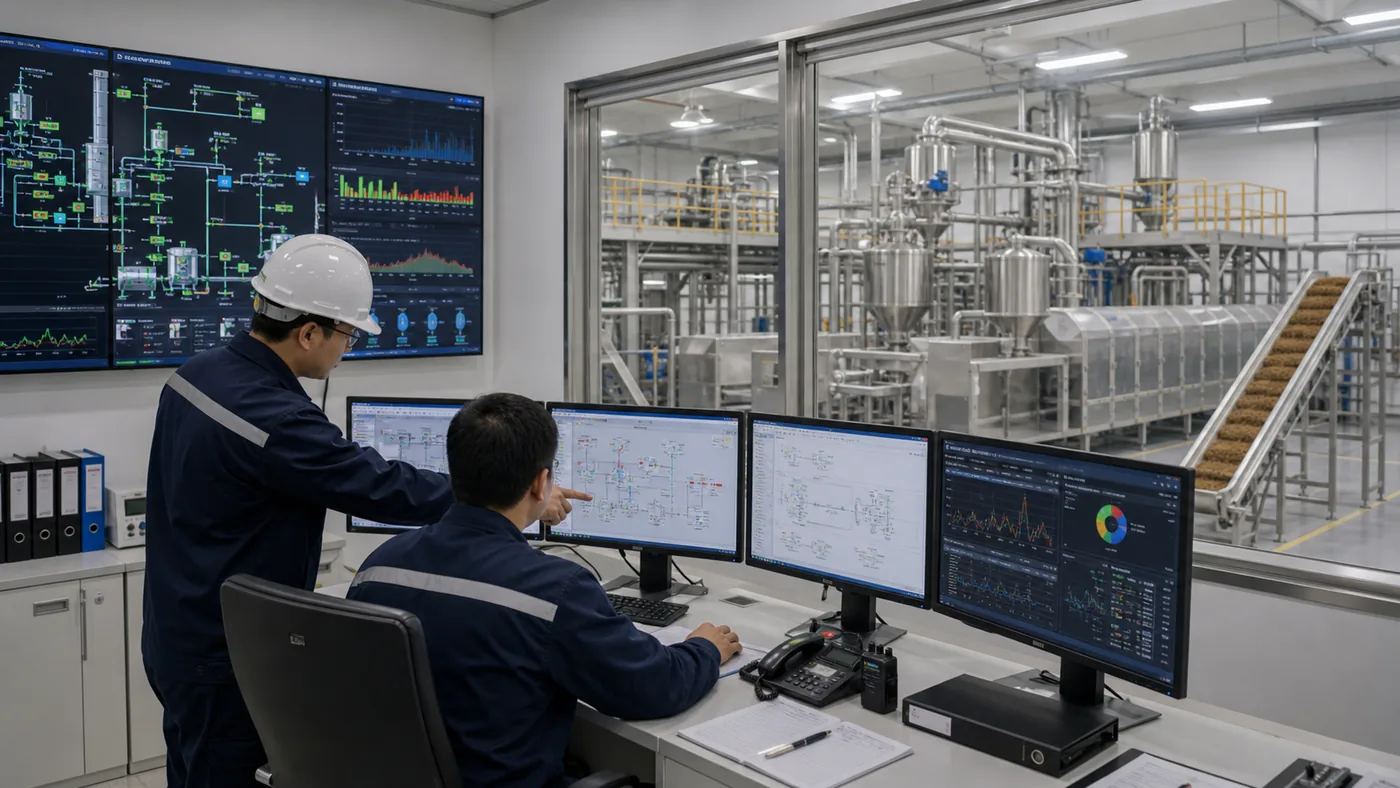
Automation in a pet food factory is not only a way to reduce labor. It is the system that connects recipe control, weighing accuracy, process stability, batch traceability, equipment safety, and production records. A factory can start with manual operation, but once output increases, product variety expands, or customers require stronger documentation, automation becomes part of the factory's operating quality.
For investors and brands planning a dry pet food plant, automation should be discussed before the final equipment package is confirmed. The right control level depends on the product route, capacity target, number of formulas, operator skill level, quality requirements, and future expansion plan. Overbuilding the system too early can waste budget, but underbuilding it can create batching errors, inconsistent process parameters, weak records, and difficult troubleshooting.
This guide explains how to think about pet food factory automation and traceability from a practical factory setup perspective. It connects with the pet food factory system, the factory setup process, and later commissioning work, because control logic must match the real production route.
What automation means in a pet food factory
Automation can include many levels. At the simplest level, each machine has local controls and operators start or stop equipment manually. A more integrated line uses PLC control, HMI screens, linked startup and shutdown sequences, safety interlocks, alarm display, and central process monitoring. More advanced projects may add recipe management, automatic batching, barcode or QR traceability, SCADA screens, production reports, energy monitoring, and integration with warehouse or quality systems.
The correct level is not the same for every project. A pilot line may need flexible manual control for product development. A commercial dry kibble line usually benefits from structured process control and stable parameter recording. A plant handling many formulas, private label customers, or export documentation may need stronger recipe permission, material traceability, and batch record management.
Start with the production route, not the software
Automation should follow the process. The team should first define the product route: raw material receiving, storage, grinding, batching, mixing, conditioning, extrusion, drying, cooling, coating, packing, warehouse, and quality checkpoints. Each stage should be reviewed for control points, measurement points, operator decisions, and record requirements.
This is why automation planning should be connected to the equipment package plan. If the equipment list changes, the number of motors, sensors, valves, feeders, scales, conveyors, and interlocks may change. If the factory layout changes, cable routes, control cabinet positions, network points, and operator stations may also change.
PLC, HMI, and SCADA control levels
PLC control is usually the foundation of an industrial pet food line. The PLC receives signals from sensors and controls motors, valves, actuators, drives, and interlocks. The HMI gives operators a visual interface for machine status, setpoints, alarms, and basic operation. SCADA or central monitoring systems can provide a broader factory view, data logging, trend charts, and production reporting.
For a new factory, the team should decide which operations are local and which are central. Some machines may need independent local operation for maintenance. Some steps should be interlocked to prevent material blockage or unsafe startup. The dryer, extruder, conveyor, cooler, and packing line may need coordinated start and stop sequences. A clear control philosophy helps avoid a factory where each machine works alone but the full line is hard to operate.
Recipe management and formula protection
Recipe management is important when the plant produces multiple SKUs, different kibble sizes, different species formulas, or private label products. A recipe system can store ingredient ratios, process setpoints, target moisture, coating level, dryer conditions, packing format, and version history. It can also control who is allowed to edit, approve, or release a formula.
Formula protection is not only about secrecy. It also reduces production errors. Operators should not need to manually copy many numbers from a paper sheet every time the product changes. A structured recipe workflow can reduce wrong material selection, wrong dosing, wrong dryer setting, wrong coating level, or wrong packing format. If the factory also supports R&D or customer trials, recipe version control becomes even more important.
Weighing accuracy and batching control
Raw material batching is one of the highest-value automation areas in a pet food factory. Errors in major ingredients can change nutrition and process behavior. Errors in minor ingredients, palatants, vitamins, minerals, or functional additives can affect quality, cost, and compliance. The batching system should match the factory's formula complexity and quality expectations.
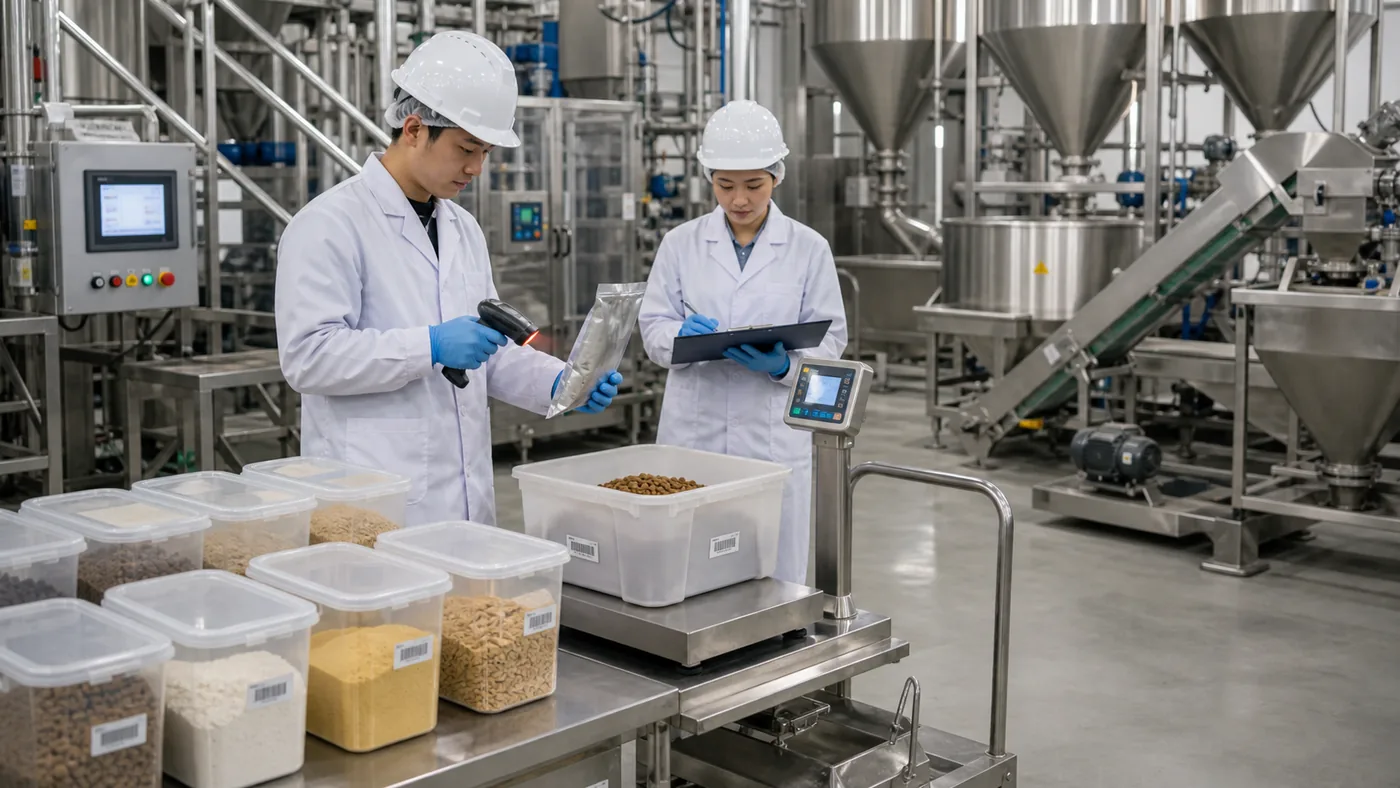
A practical batching system may include scales, feeders, barcode checking, material lot selection, tolerance limits, operator confirmation, automatic lockout for out-of-range weights, and batch record generation. The system should also handle rework rules, material substitutions, lot changes, and rejected weighing events. The earlier guide on raw material supply chain planning explains why receiving, storage, lot control, and batching should be considered together.
Traceability from raw material to finished goods
Traceability means the factory can connect a finished product batch back to the raw material lots, process records, quality checks, packaging materials, production date, operators, and storage location. For a small factory, this may start with well-designed paper records and spreadsheet controls. For a larger factory, digital traceability reduces search time and improves batch review discipline.
A good traceability system should answer practical questions: Which raw material lots entered this batch? Which formula version was used? What were the critical process parameters? Which quality tests were completed? Which packaging material lot was used? Which pallets or cartons belong to the batch? If a customer reports a problem, how fast can the factory isolate the affected batch without stopping unrelated shipments?
Alarms, deviations, and data records
Automation should help operators make better decisions, not simply show more screens. Alarm design should separate urgent safety or equipment alarms from normal reminders. Too many low-value alarms can train operators to ignore the system. A useful alarm system includes alarm priority, timestamp, operator response, root cause notes, and review during production meetings.
Data records should focus on critical points. Useful records may include batching weight, formula version, extruder load, conditioner temperature, dryer zone temperature, final moisture, cooler discharge temperature, coating addition, metal detector checks, packing weight, rejected packs, downtime reason, and maintenance events. The project team should decide which records are needed for daily production control, which are needed for quality release, and which are needed for management review.
Automation and commissioning must match
Automation design is tested during commissioning. When the line moves from installation to trial production, operators should verify startup sequence, emergency stop logic, interlocks, sensor signals, setpoint changes, alarm handling, recipe selection, data recording, and batch reporting. The guide on production line commissioning explains why trial production should include process records and operator handover, not only a short machine demonstration.
If automation is added without proper commissioning, the factory may have attractive screens but weak operating discipline. If commissioning ignores automation, operators may run around the system and return to manual habits. The two topics should be planned together.
Cybersecurity, backups, and access control
Factory automation systems need basic data protection. Recipe files, PLC programs, HMI projects, SCADA configurations, batch records, and production reports should be backed up. Access rights should separate operators, supervisors, maintenance engineers, automation engineers, and administrators. Remote access, if used, should be controlled and logged.
Not every pet food plant needs a complex IT architecture, but every plant should avoid a situation where one laptop, one password, or one failed computer can stop production or erase records. Backup files, spare hardware strategy, vendor support access, and change control should be part of the automation plan.
Phased automation investment
Automation can be phased. A first-stage factory may start with reliable machine controls, basic HMI operation, critical alarms, and clear paper records. The next stage may add automated batching, digital recipe management, barcode lot verification, and production data reports. A later stage may connect warehouse, QC, maintenance, and management dashboards.
The key is to design a path that does not block future upgrades. Control cabinets should have reasonable space, network routes should be planned, sensors should be selected with future data needs in mind, and the team should avoid isolated systems that cannot share information later. A phased approach is often more realistic than forcing a full digital system before the factory team is ready to use it.
Checklist before confirming automation scope
Before confirming the automation scope, the project team should clarify product routes, number of formulas, batch size, target capacity, operator skill level, QC requirements, traceability expectations, customer audit needs, utility integration, packaging formats, warehouse workflow, and expansion plan. The team should also define which data must be recorded automatically and which can remain as controlled manual records during the first phase.
Automation is most valuable when it supports stable production, clear records, and practical management decisions. If you are planning a new pet food factory and need to compare manual, semi-automatic, and more integrated automation routes, you can send the project requirements and request a factory automation scope review.
Review the related factory system
Compare the production route, equipment package, layout assumptions, capacity target, and operating requirements before confirming a factory plan.