A pet food factory is often discussed through extrusion, dryers, packing lines, and total investment. In real operation, however, the raw material supply chain decides whether the line can run steadily. Ingredient receiving, warehouse zoning, batching accuracy, moisture control, supplier qualification, and QC records all affect formula consistency before the material reaches the mixer or extruder.
For investors and brands planning a new dry dog food or dry cat food factory, raw material flow should be reviewed early in the factory setup process. If the warehouse, batching room, and QC workflow are planned after equipment selection, the project may face avoidable changes to building layout, labor routes, dust control, and traceability records.
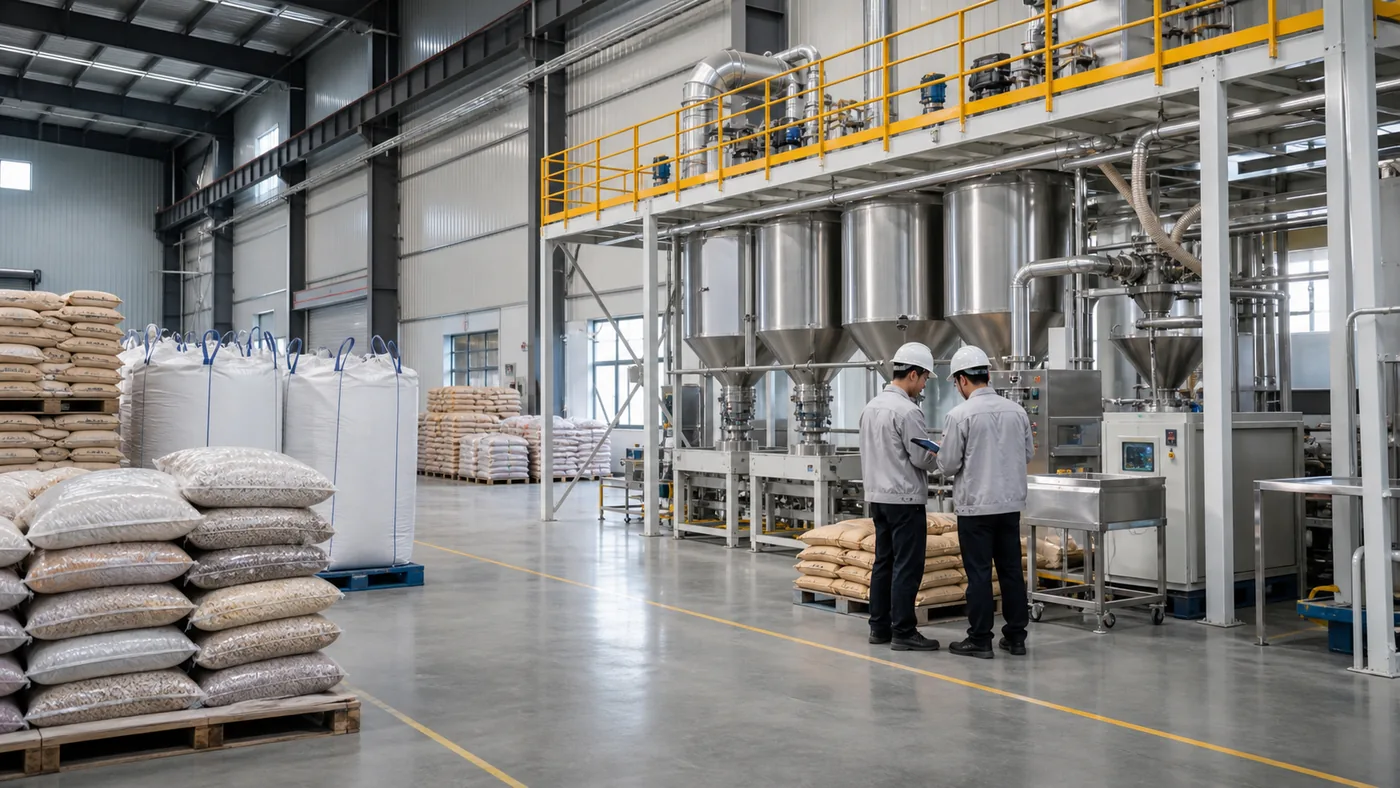
Why raw material planning comes before equipment quotation
The same extrusion line can behave very differently when the formula changes from grain-heavy kibble to high-protein meat meal formulas, or when a factory switches between dog food, cat food, treats, and functional recipes. Raw materials influence grinding load, mixer time, preconditioning behavior, dryer moisture target, oil coating ratio, and finished product stability.
Before confirming a dry kibble line equipment package, the project team should define the main ingredient groups, expected supplier countries, storage form, bulk density, moisture sensitivity, fat handling, and batch changeover frequency. This information helps size bins, conveyors, batching scales, dust collection, warehouse area, and QC points.
Receiving area: inspection before materials enter the factory
The receiving area is the first control point. A practical pet food plant should separate truck unloading, pallet staging, incoming inspection, rejected material handling, and approved material storage. When the factory receives grain, starch, meat meal, fish meal, oil, vitamins, minerals, palatants, or packaging materials, each group may need different inspection and storage rules.
Typical incoming checks include supplier name, lot number, production date, packaging condition, odor, color, foreign matter risk, moisture, and COA review. Some materials may require protein, fat, ash, peroxide value, mycotoxin, or microbiological checks depending on the formula and market requirement. The point is not to turn every project into a full laboratory from day one, but to decide which materials create the highest risk for the production route.
Warehouse zoning: avoid mixing clean flow with uncertain materials
A raw material warehouse should not be one open space where all bags and pallets are stored randomly. Even a starter factory needs a simple zoning logic: pending inspection, approved materials, rejected materials, packaging materials, additives or premix, oil storage, and cleaning tools. Clear zones reduce mistakes in batching and make supplier problems easier to trace.
Humidity and temperature also matter. In hot and humid countries, ingredient storage can become a bigger operational risk than the extrusion equipment itself. Materials such as meat meal, fish meal, starch, flavor powder, and functional additives may absorb moisture or develop odor if warehouse ventilation, pallet height, wall clearance, and rotation rules are not planned. For this reason, country conditions should be discussed with the pet food factory system plan, not only with the machine supplier.
Batching room: accuracy, speed, and traceability
Batching is where the formula becomes a production instruction. A factory may use manual weighing, semi-automatic batching, or automatic micro-dosing depending on capacity, formula complexity, and labor plan. The correct choice depends on the number of ingredients, target output, SKU count, and tolerance for human error.
Manual batching can be acceptable for a starter plant if the formula range is limited and the weighing procedure is controlled. Larger OEM or private-label factories usually need better weighing records, barcode or batch sheet control, and separate handling for micro-ingredients. A mistake in a vitamin premix, mineral component, palatant, or functional additive can affect the whole batch, so the batching workflow should be treated as a quality system, not just a labor task.
Grinding and transfer: material flow affects line stability
Raw materials do not move through the plant by themselves. Conveyors, elevators, screw feeders, pneumatic transfer, magnets, sieves, and dust collection must match the ingredient properties. A material that flows well in one factory can bridge, clump, or create dust in another if moisture, particle size, or oil content changes.
The factory layout should keep grinding, batching, mixing, and extrusion connected without creating long, difficult-to-clean material routes. If the project expects frequent recipe changes, the design should consider residue control and cleaning access. If the line is mainly for stable high-volume kibble, storage bins and automatic transfer can reduce labor and improve consistency.
Supplier qualification and documentation
Supplier qualification is part of factory setup. A pet food plant should know which materials can be sourced locally and which must be imported. Local materials can reduce cost and lead time, but they may require stronger specification control. Imported materials may improve consistency, but they add customs, shipping, storage, and working capital requirements.
At minimum, each key supplier should have a specification sheet, COA format, packaging standard, shelf-life information, and complaint handling route. For export-oriented projects, the factory should also prepare batch records, receiving logs, traceability records, and retention samples. Our Xinji Pet Food manufacturing base experience shows that documentation is easier to build into daily workflow from the beginning than to add after customers start requesting it.
QC checkpoints for raw materials
Raw material QC does not need to be oversized, but it must be practical. A starter factory may focus on visual inspection, moisture checks, COA review, supplier lot control, and retention samples. A larger factory may add protein, fat, ash, microbiology, mycotoxin screening, peroxide value, or other tests depending on product positioning and regulatory expectations.
The QC area should be located where samples can move efficiently from receiving and production, without interrupting the clean flow of finished goods. The factory also needs a decision process: who approves incoming materials, how rejected lots are isolated, how rework is controlled, and how material changes are communicated to production.
What to prepare before asking for a factory plan
Before a detailed factory plan is prepared, the project owner should collect a realistic raw material list. It does not need to be perfect, but it should include major protein sources, carbohydrate sources, oil or fat, palatant, vitamins and minerals, packaging type, local supplier assumptions, and any sensitive ingredients. The more clearly the raw material route is defined, the more useful the layout and equipment discussion becomes.
If you are preparing a pet food factory project, share the target product route, country, expected capacity, available building or land status, and raw material assumptions through the project inquiry form. The next discussion can then connect ingredient receiving, batching, production line selection, QC workflow, and launch preparation into one buildable plan.
Review the related factory system
Compare the production route, equipment package, layout assumptions, capacity target, and operating requirements before confirming a factory plan.