A factory layout is a production logic document
A pet food factory layout should not be treated as a simple drawing of where machines sit. It is a production logic document that connects raw material receiving, storage, processing, packing, warehouse, QC, utilities, operators, waste, and visitors. If the layout is wrong, even good equipment can create bottlenecks, cleaning difficulty, material crossing, or poor supervision.
The layout should be developed after product route and capacity are confirmed. A dry kibble factory, freeze dried treats factory, and supplement workshop use different zoning principles. The Factory System Solutions page shows why each production route needs its own factory system.
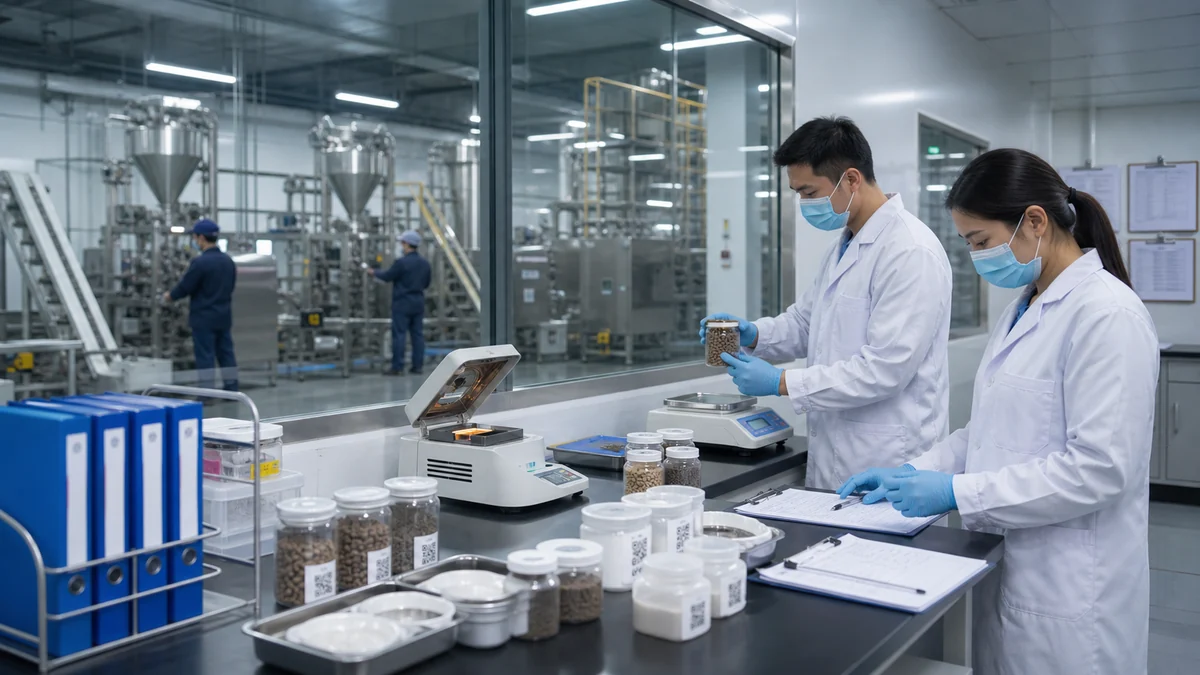
Material flow should move forward, not circle back
A practical layout moves raw materials from receiving to storage, preparation, processing, packing, finished goods, and dispatch with as little reverse flow as possible. Forklift routes, pallet areas, sack opening, dust control, waste movement, and packaging material storage should be planned together. For dry pet food, the height and length of extrusion and drying equipment also affect building selection.
If the project is a dry kibble line, the equipment relationship on Dry Kibble Line Equipment is a useful reference. Layout should make maintenance, cleaning, and operator access possible without blocking production.
- Raw material receiving and quarantine area.
- Grinding, batching, mixing, and process equipment sequence.
- Packing material storage and finished goods warehouse.
- QC sampling points and retention sample storage.
GMP thinking is about control, not decoration
For pet food and supplement factories, GMP thinking means controlled routes, clear responsibilities, cleanable surfaces, documented batches, hygiene practices, traceability, and product release discipline. It does not mean copying a pharmaceutical layout for every project. The level of control should match product risk, market expectation, and regulatory environment.
Pet supplement projects usually need stronger room control than basic dry kibble projects because weighing, active ingredients, batch records, and dosage consistency are more sensitive. The Pet Supplement Factory System page explains that route in more detail.
QC workflow should be visible in the factory plan
QC is often added too late. A better layout already includes raw material inspection points, sample movement, moisture or texture checks, metal detection, packing inspection, retention sample storage, and batch documentation. The QC room should connect logically with production without becoming a traffic shortcut.
Xinji Pet Food manufacturing experience is used as the reference base for this planning logic. Buyers can review the Factory Base page to understand why real production experience matters before launching a new plant.
What layout information should be prepared
Before requesting a layout discussion, prepare building dimensions, ceiling height, floor load, utility points, doors, truck access, product route, capacity, packaging format, raw material storage needs, and country. With these details, a supplier can propose a practical material flow rather than a generic equipment placement drawing. Send the information through Project Inquiry when ready.
Layout review checklist before construction
Before construction or renovation starts, the layout should be reviewed by production, quality, maintenance, and warehouse teams. Production will focus on flow and output. Quality will focus on separation, sampling, and traceability. Maintenance will focus on equipment access and downtime risk. Warehouse teams will focus on pallet movement, truck access, and storage capacity.
A layout that satisfies only one team usually creates operating problems after launch. The most reliable approach is to review the drawing against actual daily workflows: receiving a truck, preparing a batch, changing formula, cleaning equipment, taking QC samples, packing finished goods, and dispatching orders.
- Check truck access, raw material receiving, and warehouse routes.
- Review operator movement and hygiene transition points.
- Confirm maintenance access around tall or long equipment.
- Place QC sampling points where the workflow naturally needs them.
Official reference
Plant construction, cleanable access, maintenance, ventilation, lighting and pest-control expectations should be reviewed against applicable rules. The FDA CGMP guidance for food for animals provides a useful primary reference for U.S.-oriented projects.
Review the related factory system
Compare the production route, equipment package, layout assumptions, capacity target, and operating requirements before confirming a factory plan.