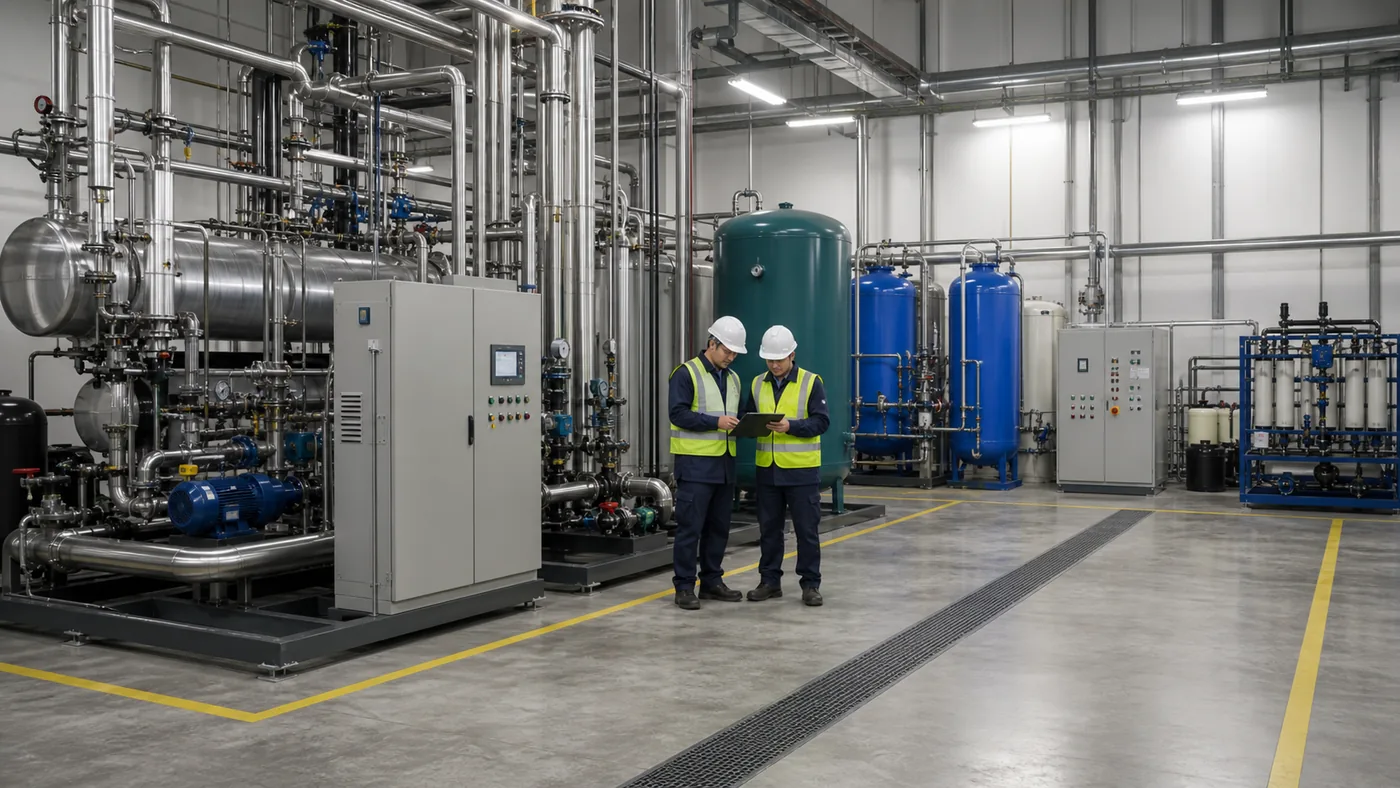
Many pet food factory plans start with the extruder, dryer, mixer, coating drum, or packing line. Those machines are important, but they cannot run well if the utility plan is treated as an afterthought. A dry pet food plant needs stable heat, power, compressed air, water, drainage, dust control, ventilation, and a maintenance route that allows operators to keep the line running without shutting down the whole workshop.
For investors and brands planning a new site, utility planning should happen before equipment installation drawings are frozen. The product route decides the utility load. A dry kibble line, baked treat line, freeze dried treat room, and supplement workshop each create different requirements. If the building, transformer, boiler room, air compressor room, dust collector position, or drainage system is undersized, the project may still be built, but production stability and future expansion will suffer.
This guide explains the core utility systems to review when planning a pet food factory. It should be read together with the pet food factory system page and the factory setup process, because utilities must match the production route, plant layout, raw material flow, and launch schedule.
Why utilities should be planned before equipment installation
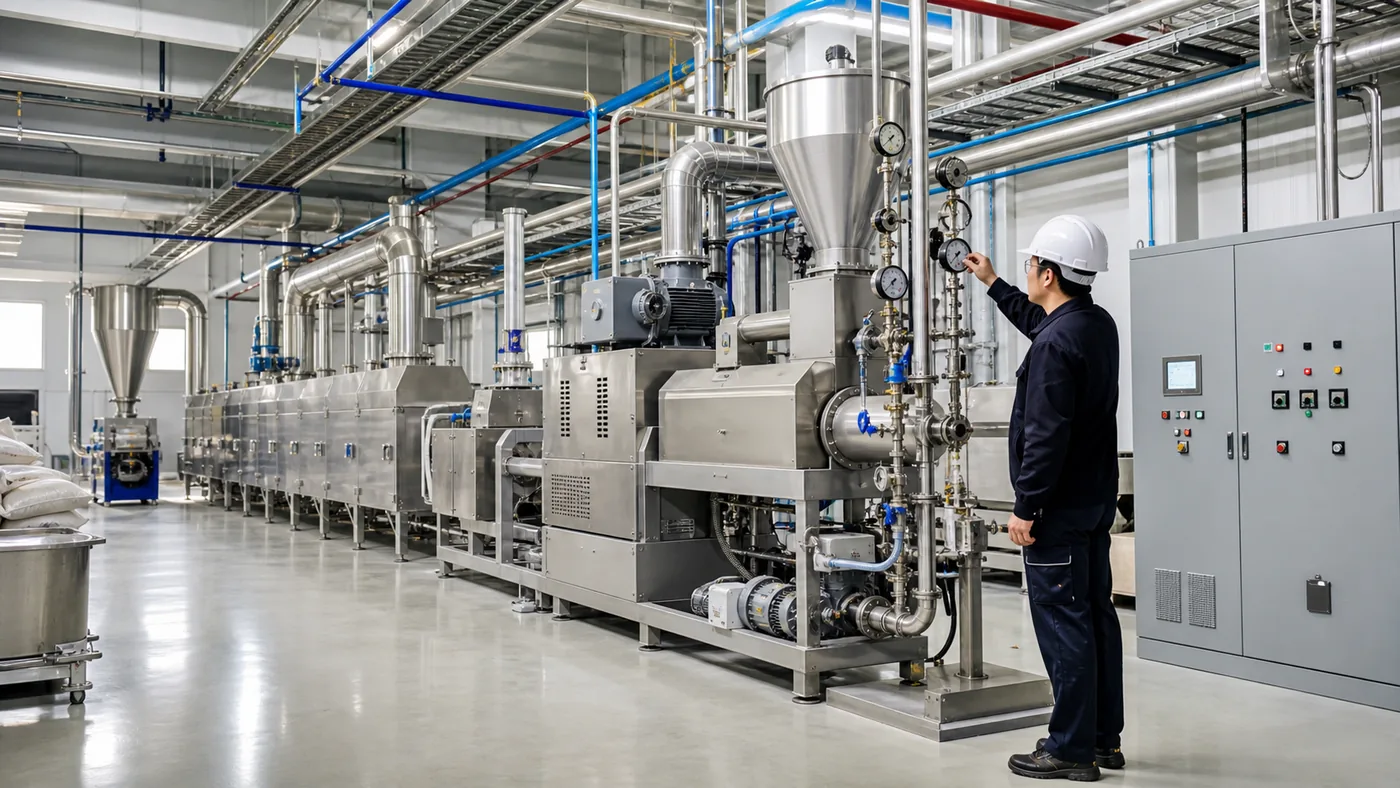
Factory equipment suppliers can provide machine power, air demand, and heating demand, but the total utility plan must be calculated at the factory level. A dryer may need steam, gas, electricity, or thermal oil depending on the selected design. A pneumatic conveying route may increase compressed air demand. A dust collection system may need space outside the production room. A packing area may require stable power, clean compressed air, coding equipment, and good temperature control for film and finished goods.
The planning sequence is simple: confirm product route, estimate output target, map the process flow, list the equipment package, then calculate utility demand by workshop zone. This prevents a common problem where each machine looks acceptable by itself, but the whole plant overloads the transformer, lacks boiler capacity, has weak air pressure at the end of the line, or creates dust pressure around grinding and batching.
Steam, thermal oil, and heating systems
Heat is one of the most important utility decisions in a dry pet food factory. The conditioning stage needs controlled heat and moisture before extrusion. Dryers need stable heat to remove moisture without damaging product appearance, palatability, or shelf life. Some factories use steam boilers, some use gas-fired hot air systems, and some designs use thermal oil depending on local fuel price, safety regulations, equipment design, and the product route.
The project team should define the heating method early because it affects the boiler room, gas pipe route, chimney position, fire safety design, utility trench, insulation, and maintenance access. For factories planning multiple lines, it is usually better to reserve space and header capacity for expansion instead of building a utility system that only supports the first line at full load.
Heating stability also affects product quality. If the dryer temperature fluctuates, moisture control becomes harder. If conditioning steam is unstable, extrusion pressure and pellet formation may vary. This is why utility planning is not only an engineering topic. It is also connected to production quality and batch repeatability.
Power load and electrical room planning
Pet food factories include motors, conveyors, grinders, mixers, extruders, dryers, coolers, coaters, pumps, dust collectors, air compressors, packing machines, lighting, HVAC, and control systems. The electrical room should be planned from the whole equipment list, not from only the main line. High-load machines should be reviewed for starting mode, control cabinet location, cable tray route, emergency stop logic, grounding, and access for maintenance.
Power planning should also consider local utility availability. Some sites have enough grid capacity, while others need transformer upgrades before installation. If the project is in an industrial park, the buyer should check power application lead time, permitted installed capacity, voltage standard, and standby power requirements. These checks should happen before finalizing the dry kibble line equipment package, because machine selection and automation level change the electrical load.
Compressed air requirements
Compressed air is used for valves, pneumatic actuators, packing machines, cleaning operations, dosing systems, conveying components, and some inspection equipment. The required pressure and air quality vary by use. Packing areas and contact-sensitive areas may need drier and cleaner air than general pneumatic controls. The air compressor room should include space for compressors, dryers, filters, air tanks, ventilation, maintenance access, noise management, and drainage from condensate treatment.
One practical mistake is placing the compressor too far from major air users without checking pressure loss. Another is installing only enough capacity for the first months of production. A better plan includes a main air header, branch lines by workshop zone, pressure monitoring, and a clear reserve for the next equipment stage. If future packing automation or additional conveying systems are likely, reserve air capacity from the beginning.
Water, drainage, and cleaning routes
Water demand depends on the formula, conditioning method, cleaning plan, hygiene zoning, staff facilities, and any supplement or treat process connected to the plant. A dry kibble line may not look like a heavy water user compared with wet food production, but it still needs reliable process water, cleaning water, boiler feed water, and drainage planning. Water treatment may also be required depending on local water quality and product standards.
Drainage design should separate production cleaning, utility condensate, staff area drainage, and outdoor drainage where required by local regulation. Floor slope, trench covers, drain positions, and cleaning routes should be coordinated with equipment foundations and traffic routes. A plant that is easy to clean is usually easier to operate, audit, and maintain.
Dust collection and ventilation
Grinding, raw material batching, powder transfer, minor ingredient handling, and some packing operations can create dust. Dust collection must be planned as a system: capture points, duct routing, fan selection, filter area, discharge method, explosion or fire safety review where applicable, and cleaning access. The dust collector should not simply be added after the main layout is finished, because duct length and pressure loss can affect performance.
Ventilation and room pressure also matter. Hot areas near dryers and compressors need heat removal. Ingredient rooms may need dust control and comfortable operating conditions. Supplement workshops may require more controlled room conditions depending on dosage form and quality expectation. These decisions should connect with the broader factory layout and QC workflow, not be handled as separate decoration or HVAC decisions at the end.
Utility rooms, pipe routes, and maintenance access
Good utility planning makes the factory easier to maintain. Operators should be able to reach valves, filters, gauges, panels, grease points, motors, and inspection doors without unsafe climbing or removing unrelated equipment. Pipe routes should avoid blocking clean traffic, forklift movement, raw material staging, or future machine installation.
For new factories, reserve clear technical spaces for boiler or thermal system, air compressor system, electrical room, water treatment, dust collection, spare parts, maintenance tools, and waste handling. These spaces do not always look productive in the drawing, but they protect the production line when the factory moves from first trial production to continuous commercial operation.
Expansion reserve and phased investment
Many pet food factories start with one product route and then expand after the market is proven. The utility system should support that possibility. It is not always necessary to buy all future utility equipment on day one, but the building, pipe trench, electrical room, transformer area, dust collector position, compressor room, and outdoor utility space should not block future expansion.
A practical phased plan can separate minimum launch capacity from future reserve. For example, the first phase may support one dry kibble line and one packing route, while the building design leaves a route for a second dryer, additional finished goods packaging, or expanded raw material storage. This approach is often more realistic than overbuying equipment too early or rebuilding the utility area after the first year.
Utility checklist before confirming the factory plan
Before confirming a pet food plant layout, the buyer should prepare a basic utility checklist. The list should include installed power and running power, peak air demand, steam or heat load, water quality and water flow, drainage route, dust collection points, ventilation demand, fuel availability, local safety rules, maintenance access, and future expansion reserve.
The checklist should be reviewed together with the production route, equipment list, and launch plan. If the factory is intended for export-oriented products, the utility plan should also support stable packaging, coding, finished goods storage, and documentation workflow. Our guide on pet food packaging line planning explains why packing and warehouse details should not be separated from the production line plan.
PetFactorySystem.com uses Xinji Pet Food manufacturing experience as a practical reference base for these planning discussions. If you are comparing sites, reviewing a building, or preparing a new pet food factory project, you can send the basic project information and request a utility review together with the production route and equipment scope.
Official reference
Air emissions, odor control and permitting depend on the country and process. For UK-oriented projects, review the government pet food manufacturing process guidance note with qualified local environmental support.
Review the related factory system
Compare the production route, equipment package, layout assumptions, capacity target, and operating requirements before confirming a factory plan.