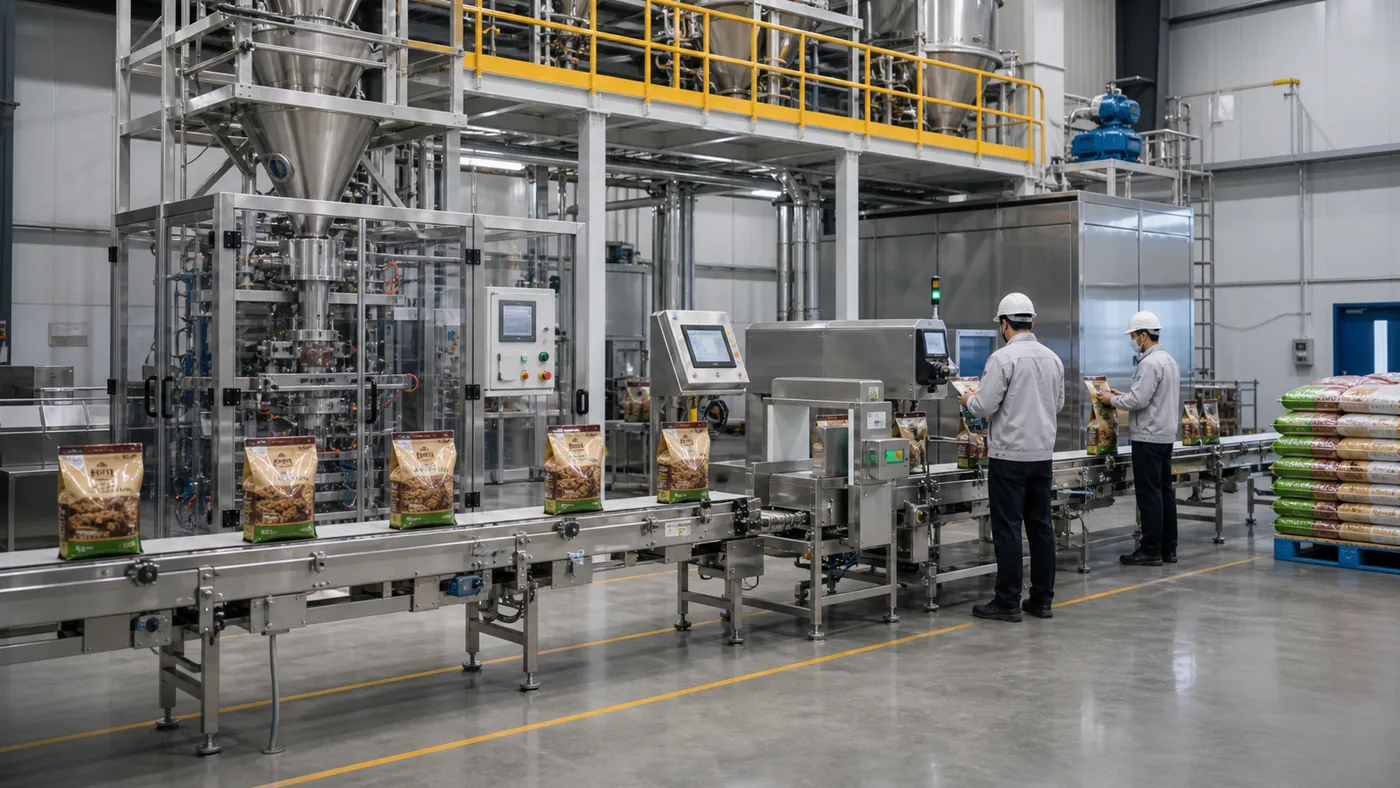
Pet food factory planning should not stop at extrusion, drying, and cooling. The packaging line decides how quickly finished kibble becomes a sellable product, how clearly each batch can be traced, and whether the factory can handle different bag sizes, private-label orders, and export shipment requirements without creating bottlenecks.
For many new projects, packaging is treated as a later purchase. This is risky. Bag format, weighing accuracy, metal detection, date coding, palletizing, finished goods storage, and export documents all influence the factory setup process. A plant that plans packaging too late may find that the dryer and cooler can produce more than the packing area can handle.
Start with pack size and market channel
The first packaging decision is not the machine model. It is the market channel. A factory selling through retail shelves may need small bags with stronger visual quality and strict coding. A factory supplying breeders, distributors, or institutional buyers may need larger sacks, stronger sealing, and faster pallet movement. Export projects may need multilingual labels, batch codes, carton labels, pallet labels, and documentation aligned with the buyer country.
Typical dry dog food and dry cat food pack sizes can range from small pouches to medium retail bags and larger sacks. Each format changes the weighing system, sealing method, conveyor width, coding position, case packing or palletizing logic, and warehouse turnover. These decisions should be discussed together with the pet food factory system, not treated as isolated packaging equipment.
Core equipment in a pet food packaging line
A common packaging area may include buffer bins, elevator or conveyor feeding, weighing system, bagging machine, sealing or sewing, checkweigher, metal detector, date coder, reject conveyor, manual inspection table, carton or bundle handling, palletizing, and stretch wrapping. The exact configuration depends on pack size, speed target, package material, and labor availability.
The packaging line must match upstream capacity. If the dry kibble production line can produce steadily but the bagging area stops frequently for roll changes, coding adjustments, or manual pallet movement, the whole factory loses output. This is why packaging speed should be calculated from realistic operating time, not only from the machine brochure.
Weighing, checkweighing, and metal detection
Weight control protects both the customer and the factory. Underweight packs create complaints and regulatory risk. Overweight packs quietly reduce margin. A packaging plan should define target weight, tolerance, calibration routine, rejected-pack handling, and operator responsibility.
Metal detection is normally placed after packing or at a controlled inspection point before finished goods release. The factory should define how test pieces are used, how rejects are recorded, and who can release product after an alarm. For export or private-label production, these records may become part of the buyer audit or shipment documentation.
Date coding, batch coding, and traceability
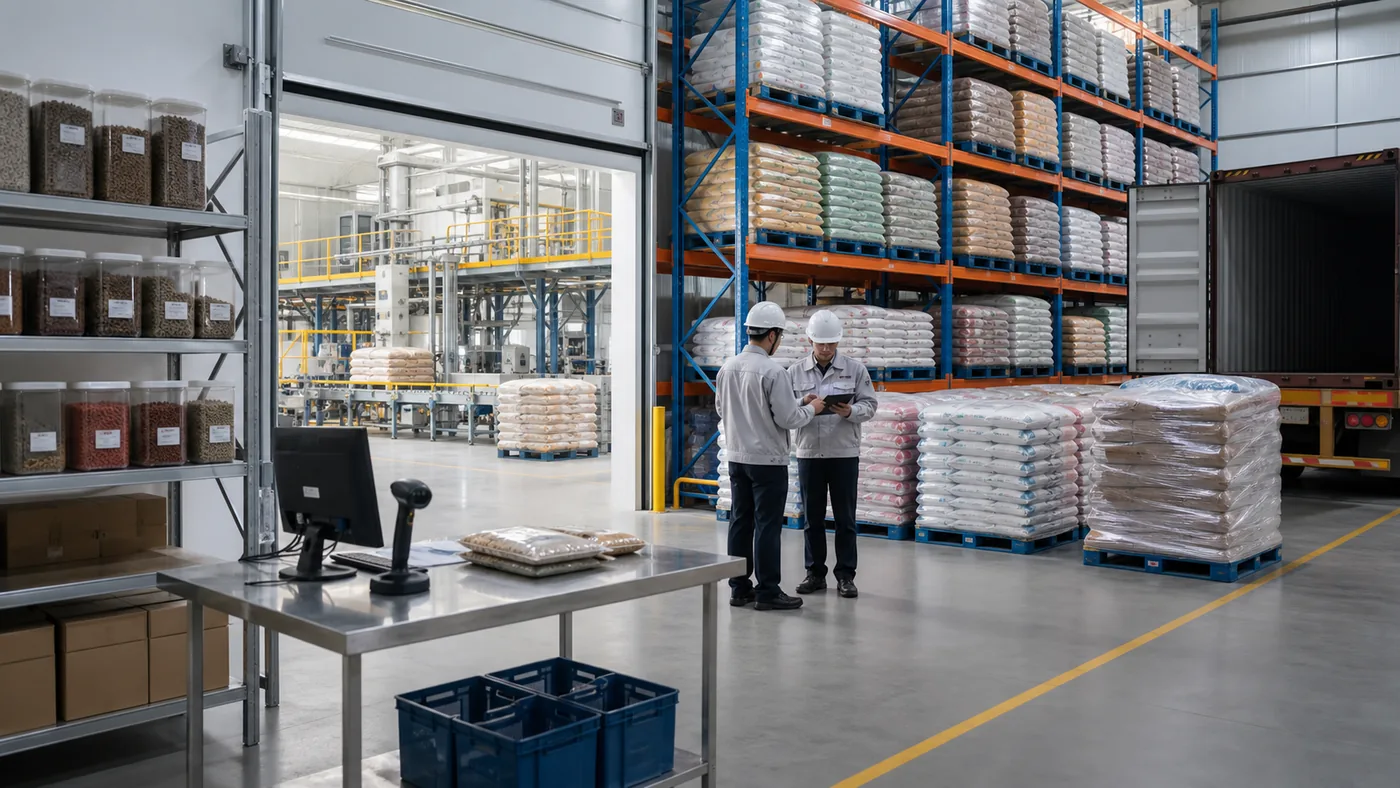
Packaging is where batch traceability becomes visible. Each finished bag should connect back to production date, formula, raw material lots, process records, QC results, and finished goods warehouse location. A simple factory can start with clear batch sheets and coding records. A larger factory may use barcode scanning, label control, and warehouse management procedures.
The key is consistency. If date coding is easy to read but internal records cannot connect the bag to the production batch, the factory still has a traceability gap. Coding position, ink adhesion, bag surface, print contrast, and operator checks should be part of the packaging trial before commercial launch.
Packaging material and sealing quality
Pet food packaging must protect against moisture, odor loss, oil migration, breakage, and contamination. Bag material should match product moisture, fat level, shelf-life target, local humidity, and distribution route. Small retail packs may need stronger shelf appearance, while large sacks need strength, sealing reliability, and stacking performance.
Sealing failures create hidden cost. A bag that looks acceptable at the machine may open during palletizing, container loading, or long-distance shipping. The factory should test seal strength, drop resistance, pallet stacking, and storage behavior before scaling up. This is especially important in hot or humid countries where packaging barrier and warehouse ventilation affect shelf stability.
Finished goods warehouse and pallet flow
The finished goods warehouse should not be an afterthought. It needs space for quarantine, released stock, export staging, customer-specific orders, returned or held goods, and loading. Pallet routes should be separated from raw material movement as much as possible, especially where hygiene and traceability are important.
Warehouse planning affects cash flow and production rhythm. If the factory produces faster than it can store, inspect, or ship, production will stop even when the extrusion line is available. If the warehouse is too large but poorly organized, it increases labor movement and inventory confusion. A balanced plan links packing speed, pallet count, order size, and shipment schedule.
Export readiness: documents, labels, and shipment control
Export-oriented factories need more than a packing machine. They need a document workflow. Depending on the market and buyer requirements, the factory may prepare commercial invoice, packing list, COA, product specification, batch number records, shelf-life information, label files, and sometimes third-party inspection support.
The factory should confirm label language, ingredient declaration, net weight, production date, expiry date, storage condition, and importer information before printing packaging materials. For private-label orders, artwork approval and packaging lead time can become a bottleneck if they are not managed before trial production.
How to choose the right packaging level
A starter plant can begin with a semi-automatic packaging line if output is moderate and labor is available. An OEM-capable plant usually needs stronger weighing, coding, inspection, and pack-size changeover control. An export-scale factory may need higher automation, pallet handling, barcode workflow, and stricter finished goods release procedures.
Packaging level should be selected after product route, capacity, pack size, order model, and building layout are clear. The decision belongs with the full project plan, alongside raw material storage, extrusion, drying, coating, QC, warehouse, and launch preparation. If your project is already comparing equipment, it helps to review the raw material supply chain plan and the finished goods flow together.
Project information to prepare
Before requesting a packaging line plan, prepare the target country, product type, bag sizes, expected daily output, number of SKUs, retail or bulk sales channel, label language, coding requirements, warehouse space, and export expectations. If the product will be made for several brands, also prepare the expected changeover frequency and artwork approval process.
PetFactorySystem.com can review packaging, warehouse, and traceability assumptions as part of a buildable factory plan. Share your project route through the project inquiry form so the discussion can connect production output, packaging speed, finished goods storage, QC release, and shipment preparation.
Review the related factory system
Compare the production route, equipment package, layout assumptions, capacity target, and operating requirements before confirming a factory plan.