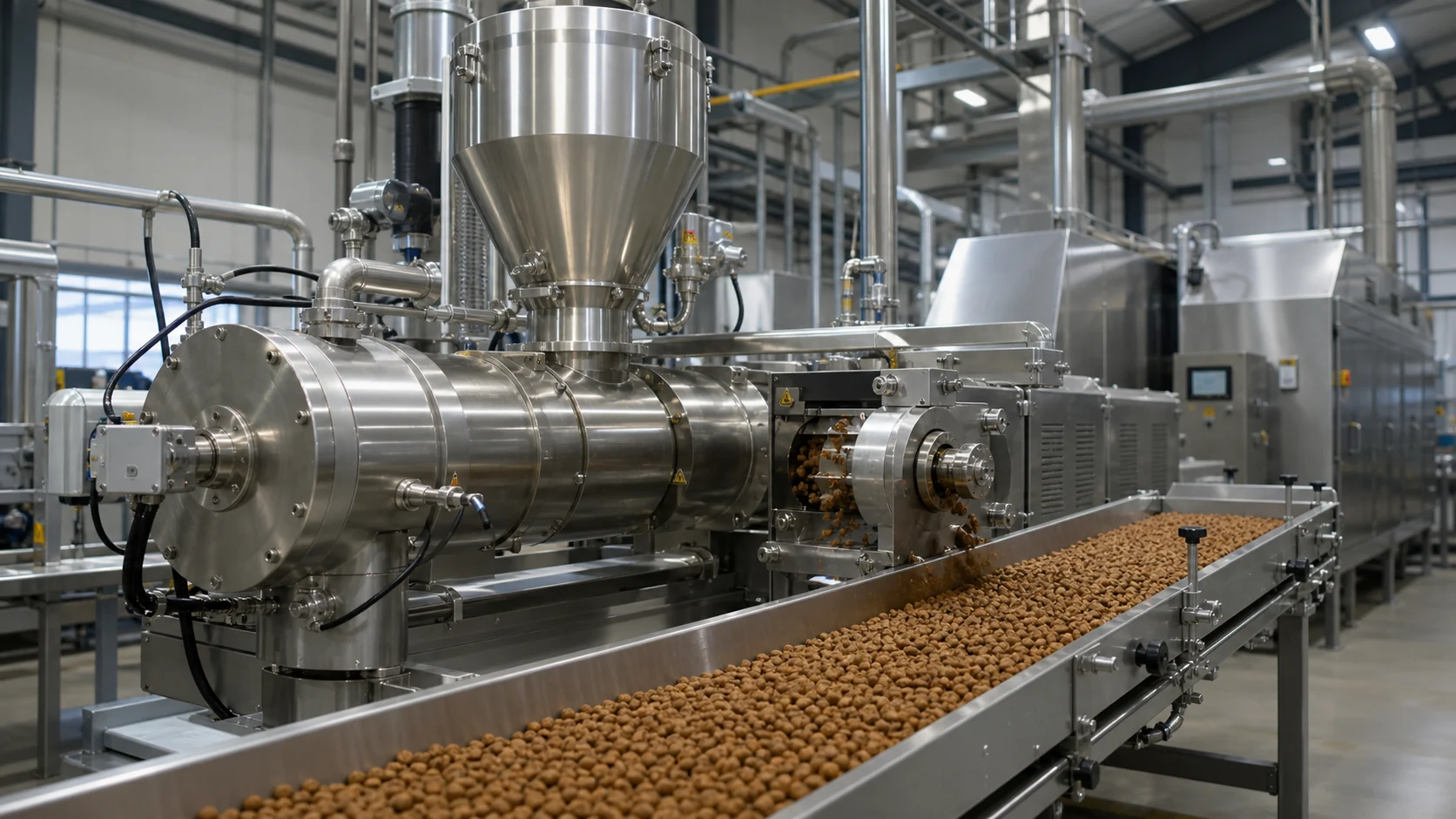
Where extrusion sits in the line
Extrusion is the cooking and shaping stage of a dry pet food line, but it cannot work alone. Stable extrusion depends on grinding, batching, mixing, steam conditioning, die and cutter setup, dryer capacity, coating control, and packing rhythm.
A full production route is easier to compare from the Pet Food Factory System page, because the extruder must be matched with upstream preparation and downstream moisture control.
Ingredient preparation before the extruder
Raw material particle size, weighing accuracy, premix handling, and mixer uniformity decide whether the extruder receives a stable feed. If grinding is uneven or batching is inconsistent, the extrusion barrel will show unstable pressure, product shape variation, and higher waste during startup.
Preconditioning adds steam, water, heat, and retention time before the extruder. This stage affects starch gelatinization, texture, density, digestibility, and dryer load.
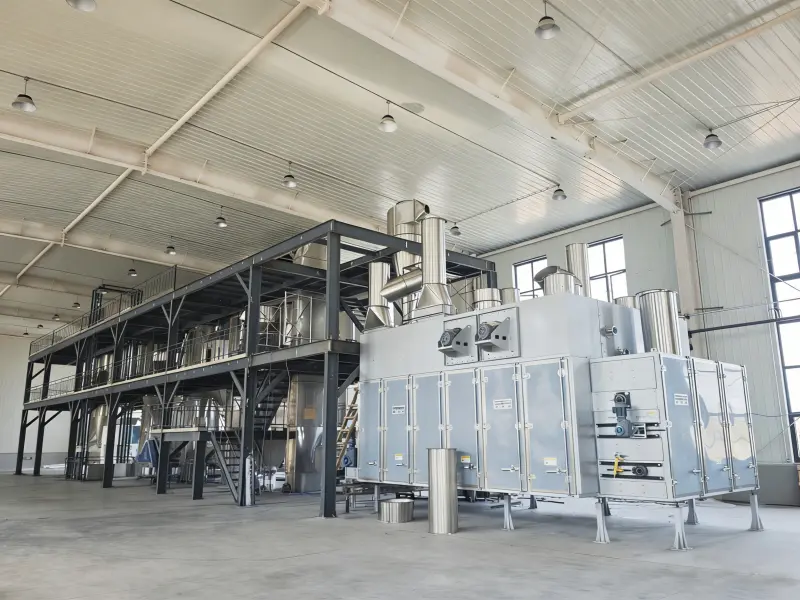
Extruder, die, and cutter control
The extruder barrel, screw configuration, die, and cutter decide the product shape and cooking profile. A premium kibble, a standard dry dog food, and a smaller cat food product may require different die opening, cutter speed, moisture target, and dryer setting.
This is why equipment should be discussed as a package. The dry kibble line equipment view shows how the extruder connects with feeding, drying, coating, and packing instead of being selected as an isolated machine.
Drying and coating after extrusion
Fresh extruded kibble still contains moisture and heat. The dryer must reduce moisture to a stable target without damaging shape or color. After cooling, coating adds fat, palatants, or functional ingredients and must be controlled so each batch remains consistent.
For broader layout and QC implications, the guide on dry kibble production line planning is a useful next read.
Practical project checks
Before selecting an extrusion line, prepare formula type, protein and starch direction, target shape, bulk density, moisture target, hourly capacity, energy condition, and pack format. These inputs make the equipment discussion more accurate and reduce redesign during commissioning.
Formula properties and machine settings interact
Extrusion performance depends on starch source, protein level, fat addition, fiber, particle size, water addition and steam conditioning. A formula cannot be separated from equipment selection. The preconditioner, screw profile, barrel zones, die, cutter and dryer must provide enough operating range for the planned products without relying on one fixed recipe.
Balance the extruder with the dryer and coater
The extruder may produce short peaks above the stable capacity of the dryer. If downstream equipment is undersized, moisture variation, residence-time changes and production stops follow. The design target should be continuous saleable output after drying, coating and cooling, with enough control range for different kibble sizes and formulas.
Define process checks during trial production
Commissioning should record feed rate, conditioning moisture, steam pressure, motor load, product temperature, die pressure, cutter speed, bulk density, dryer inlet and outlet conditions, final moisture, coating addition and cooling temperature. These records create a practical operating window for the factory team.
Plan cleaning and maintenance access
Operators need safe access to the preconditioner, feed screws, die and cutter, dryer zones, coating system and transfer points. Platforms, lifting points, isolation procedures, dust removal and spare die storage should be considered in the layout before installation.
Review the related factory system
Compare the production route, equipment package, layout assumptions, capacity target, and operating requirements before confirming a factory plan.