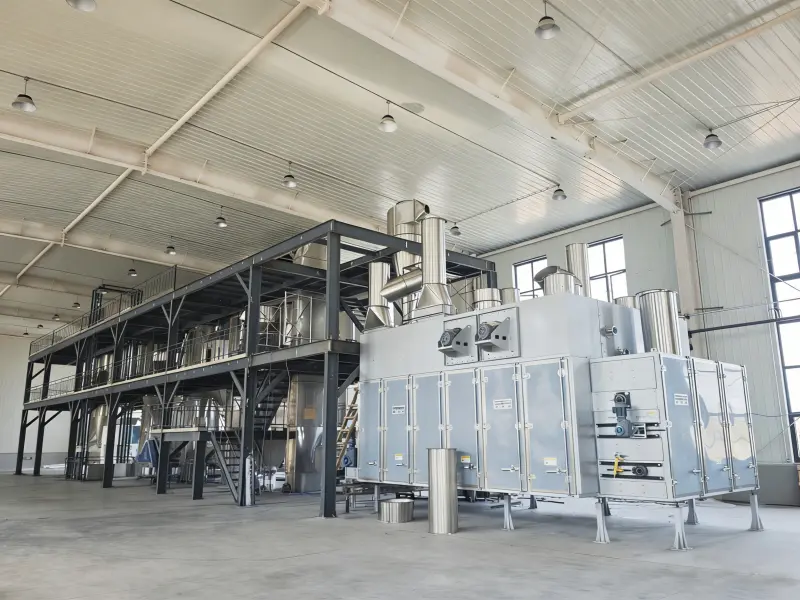
A dry kibble line is a connected production system
A dry kibble factory normally moves from material receiving to grinding, batching, mixing, preconditioning, extrusion, drying, coating, cooling, metal detection, weighing, packing, and finished goods storage. Each stage affects the next one, so line planning should begin with the product route and target capacity.
The overall route can be compared against the pet food factory system before the equipment package is frozen.
Capacity and bottleneck planning
The extruder may be the visible core machine, but the real bottleneck can appear in grinding, dryer residence time, coating drum size, cooling time, or packing speed. A factory plan should calculate practical output by the slowest stage under real product conditions.
When multiple formulas or pack sizes are planned, the factory also needs time for cleaning, changeover, quality checks, and packaging setup.
Layout and material movement
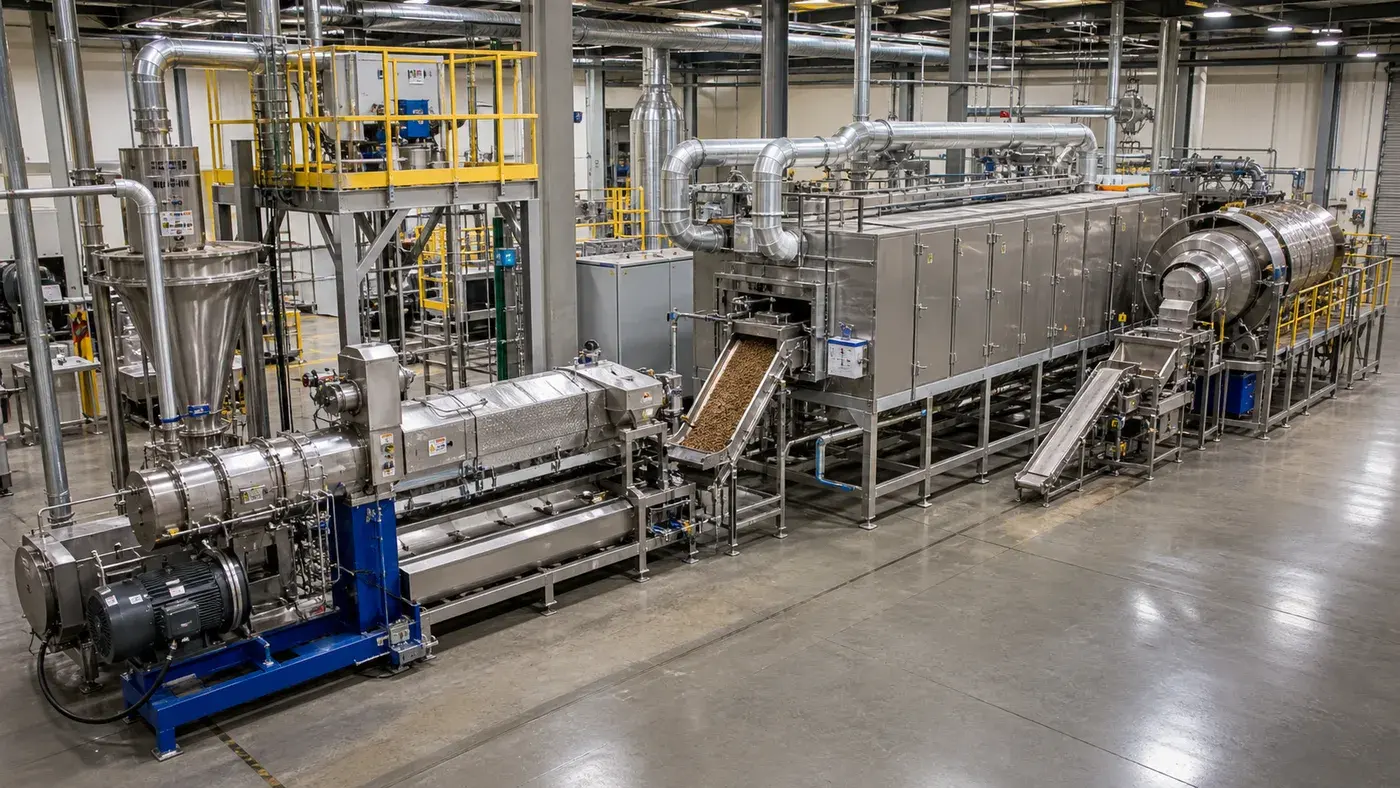
A practical layout separates raw material receiving, powder preparation, hot process areas, cooling, packing, finished goods, and QC checks. It should reduce cross movement, keep dust under control, leave room for maintenance, and allow future expansion if the brand grows.
The step-by-step checks in the factory setup process help connect building size, utilities, raw material flow, and launch preparation before equipment purchase.
Equipment package boundaries
A dry kibble package should define which conveyors, platforms, dust collection, control cabinets, air systems, packing machines, and commissioning services are included. The dry kibble line equipment page gives a more detailed equipment view for this comparison.
QC points in a kibble factory
Quality control should cover raw material inspection, formula weighing, mixer uniformity, extrusion stability, dryer moisture, coating consistency, metal detection, package weight, batch records, and retention samples. These checks should be planned into the workflow, not added after installation.
Receiving and batching determine line stability
Raw material unloading, screening, storage and dosing should protect ingredients from moisture, pests and cross-contact while keeping the mixer supplied. Major ingredients may use silos or bulk bins, while minor ingredients require controlled weighing and identification. Batching accuracy and mixer cycle time must match the continuous demand of the extrusion section.
Utilities must follow the real operating load
The project should calculate connected and operating electrical load, steam demand, compressed air, water, ventilation, dust collection and thermal energy for the dryer. Utility sizing should include startup peaks and future expansion without creating an oversized system that operates inefficiently at the first production stage.
Layout should protect flow and maintenance access
A practical layout keeps raw receiving, grinding, hot processing, coating, packing and finished goods movement clear. It also provides platforms, lifting space, access around motors and gearboxes, removable panels, cleaning routes and safe forklift circulation. Equipment that fits on a drawing may still be difficult to operate if these spaces are omitted.
Packing and warehouse capacity must match the line
Finished kibble needs enough cooling time before packing. Weighing speed, bag size changes, coding, metal detection, pallet handling and warehouse turnover can become the final bottleneck. The line capacity should therefore be confirmed at packed and released product, not only at the extruder outlet.
Review the related factory system
Compare the production route, equipment package, layout assumptions, capacity target, and operating requirements before confirming a factory plan.