Soft chews require a different factory logic from dry kibble
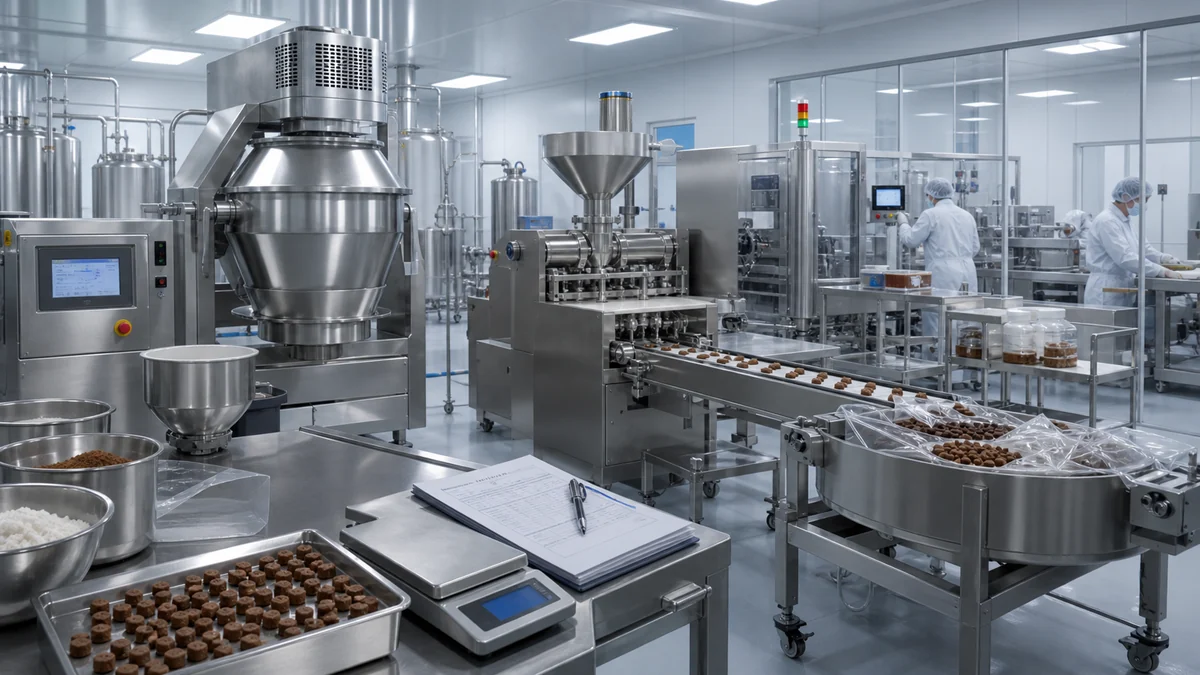
A pet supplement soft chews project is closer to controlled batch production than continuous extrusion. The factory must manage ingredient weighing, active ingredient handling, binder or matrix preparation, mixing, forming, drying or setting, inspection, packing, and batch records. The room environment, cleaning method, allergen or active ingredient control, and documentation can be more important than the size of a single machine.
The first decision is dosage form. Soft chews, tablets, and powders can share some raw material and packing logic, but the process equipment and room zoning are different. Compare the broader route on the Pet Supplement Factory System page before defining equipment.
Batching and ingredient control come first
Supplement production often uses smaller-volume, higher-value ingredients compared with dry pet food. Premix accuracy, weighing control, sieve or milling requirements, moisture sensitivity, and cross-contact prevention should be considered before layout design. If the factory handles active ingredients, probiotics, oils, flavors, or functional powders, storage and dosing procedures need clear controls.
A practical soft chews workshop usually separates raw material receiving, quarantine, weighing, mixing, forming, setting or drying, packing, and finished goods storage. The equipment package shown in Pet Supplement Line Equipment should be selected after the batch flow is defined.
- Ingredient storage and weighing rooms for controlled batching.
- Mixing system sized by batch weight and material texture.
- Forming or cutting method matched to soft chew shape and size.
- Packing route based on pouch, jar, sachet, or blister-style formats.
GMP expectations affect room zoning and workflow
GMP-style planning does not mean every project needs the same room grade. It means the factory should have a clear logic for personnel flow, material flow, cleaning, pest control, batch identification, document control, and finished product release. The higher the export expectation or brand quality requirement, the more attention should be paid to room separation, air handling, sanitation, and traceability.
A soft chews project should avoid crossing dirty and clean routes. Raw materials, operators, packaging materials, semi-finished products, and waste should move through planned routes. The Factory Base page explains why our planning uses manufacturing experience rather than only machine selection.
QC should be designed into the batch process
Quality checks may include raw material identity, moisture, weight variation, chew texture, visual inspection, metal detection, package seal checks, batch records, retention samples, and stability observations. If the product includes sensitive ingredients, the factory may also need controlled storage and defined hold times.
These requirements should be discussed before equipment confirmation. Otherwise a line may be able to form chews but still fail to support the documentation and release workflow needed by a serious brand.
Information needed for project planning
When requesting a plan, prepare dosage form, target batch size, expected daily output, ingredient types, room expectations, packing format, country, and whether the project is for own-brand production or OEM/ODM service. Submit these details through Project Inquiry so the workshop layout and equipment package can be discussed together.
Planning questions before equipment confirmation
Soft chews projects should clarify whether the product is positioned as a daily nutrition treat, a functional supplement, or a private label OEM/ODM product. This affects raw material control, claims support, batch documentation, packing format, and quality expectations. The equipment package should follow these commercial decisions rather than forcing the brand to fit a generic machine setup.
The project team should also define cleaning expectations between formulas. If the same workshop produces several formulas with different functional ingredients, the layout and standard operating procedures must support changeover, line clearance, and batch identification. These requirements are easier to build into the factory plan before equipment installation.
- Define soft chew size, shape, moisture target, and texture expectation.
- Confirm whether products share ingredients or need stronger separation.
- Plan batch records, retention samples, and finished product release.
- Match packing format to shelf life, brand positioning, and output target.
Review the related factory system
Compare the production route, equipment package, layout assumptions, capacity target, and operating requirements before confirming a factory plan.