Freeze dried treats are planned by batch flow
Freeze dried pet treats are usually planned as a batch process. The key factory questions are raw material preparation, cutting or forming, tray loading, freezing, freeze drying cycle time, unloading, inspection, packing, and storage. Unlike dry kibble, the bottleneck is often the freeze dryer chamber capacity and cycle schedule, not a continuous extruder output.
A good plan starts with product type: meat cubes, mixed treats, functional treats, or private label snack formats. Each product changes preparation labor, tray loading density, freezing method, cycle time, packing material, and cold chain assumptions. For a broader treats route, compare Freeze Dried and Treats Line Equipment.
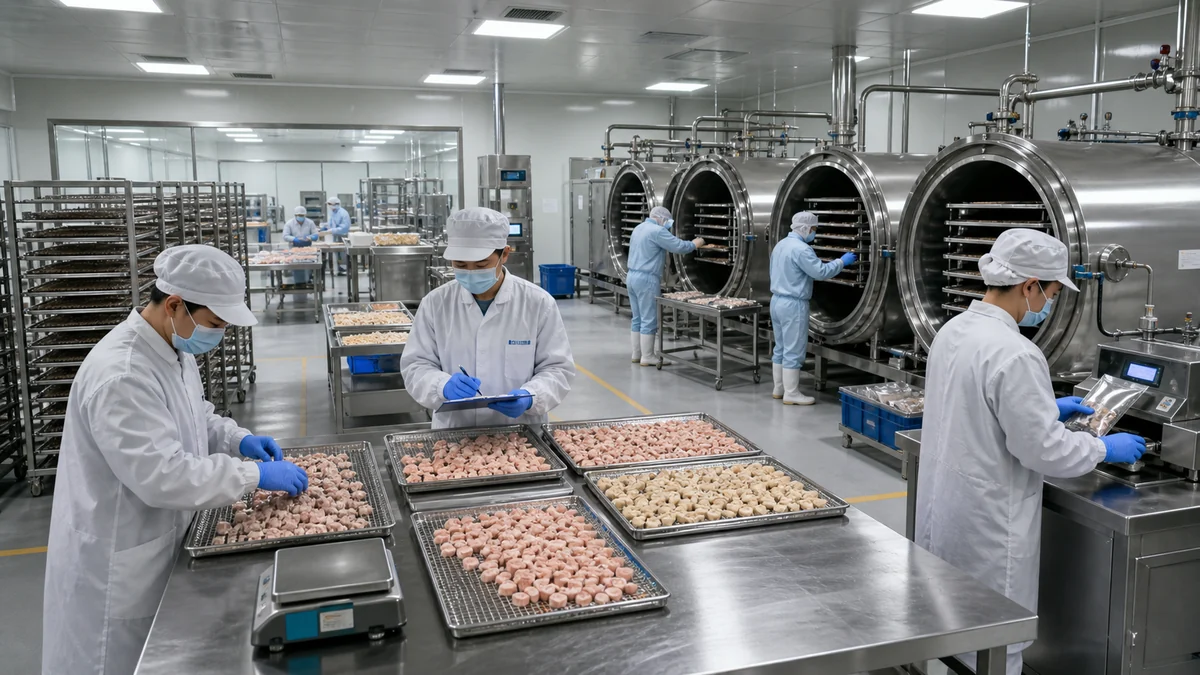
Raw material handling and sanitation are critical
Because freeze dried treats often use meat or high-value ingredients, raw material receiving, refrigerated or frozen storage, thawing, cutting, trimming, and preparation rooms must be designed carefully. The factory should separate raw material movement from finished product movement and define sanitation procedures for tables, trays, knives, molds, racks, and floor areas.
If the project targets export or premium brands, the factory should also plan metal detection, foreign material control, batch identification, temperature records, and retention samples. The quality and documentation logic is as important as the freeze dryer itself.
- Raw material receiving and cold storage requirements.
- Cutting, forming, or preparation labor and hygiene controls.
- Tray loading density and rack movement between rooms.
- Packing material barrier performance and seal inspection.
Batch capacity is not the same as annual output
Freeze dryer chamber volume only tells part of the story. Real output depends on product moisture, loading thickness, freezing method, cycle time, unloading time, cleaning time, packing speed, and the number of chambers available. A project with several small chambers may offer scheduling flexibility, while a larger chamber may require stronger planning discipline.
Annual output should be calculated from realistic production days and cycle plans. Buyers should avoid assuming that every chamber runs full every day. Maintenance, sanitation, product changeover, and raw material availability must be included in the planning model.
Layout must support cold and dry zones
A freeze dried treats factory may include cold storage, raw preparation, freezing, freeze drying, dry product handling, packing, finished goods storage, QC, and sanitation areas. The layout should prevent wet raw material zones from interfering with dry finished product handling. Personnel routes, material routes, waste routes, and packaging material routes should be planned before equipment is ordered.
For the overall planning sequence, review Factory Setup Process. It is especially important for freeze dried projects because building conditions and utilities can decide whether the equipment can operate efficiently.
When to request a factory plan
Prepare product type, raw material state, expected batch size, chamber preference, package format, target market, building information, and sanitation expectations. If you are comparing freeze dried treats against dry kibble or supplement production, use the Pet Food Factory System page first, then send a project inquiry through Contact.
Key risks to control before launch
Freeze dried projects need careful control of raw material freshness, room hygiene, tray handling, cycle validation, and packaging barrier performance. Even if the freeze dryer is well selected, poor preparation flow or slow packing can affect product quality. The factory should define how product moves from raw preparation to frozen state, from frozen state to drying, and from drying to final sealed package.
Another risk is underestimating labor. Tray loading, unloading, inspection, cleaning, and packing can require more labor than investors expect. Automation can reduce some handling, but the factory still needs trained operators and clear work instructions. A realistic staffing plan should be part of the factory setup discussion.
- Validate raw material receiving and cold storage conditions.
- Plan tray loading density and sanitation between batches.
- Confirm packing barrier performance and seal inspection.
- Estimate labor for preparation, loading, unloading, and cleaning.
Review the related factory system
Compare the production route, equipment package, layout assumptions, capacity target, and operating requirements before confirming a factory plan.